- Motor
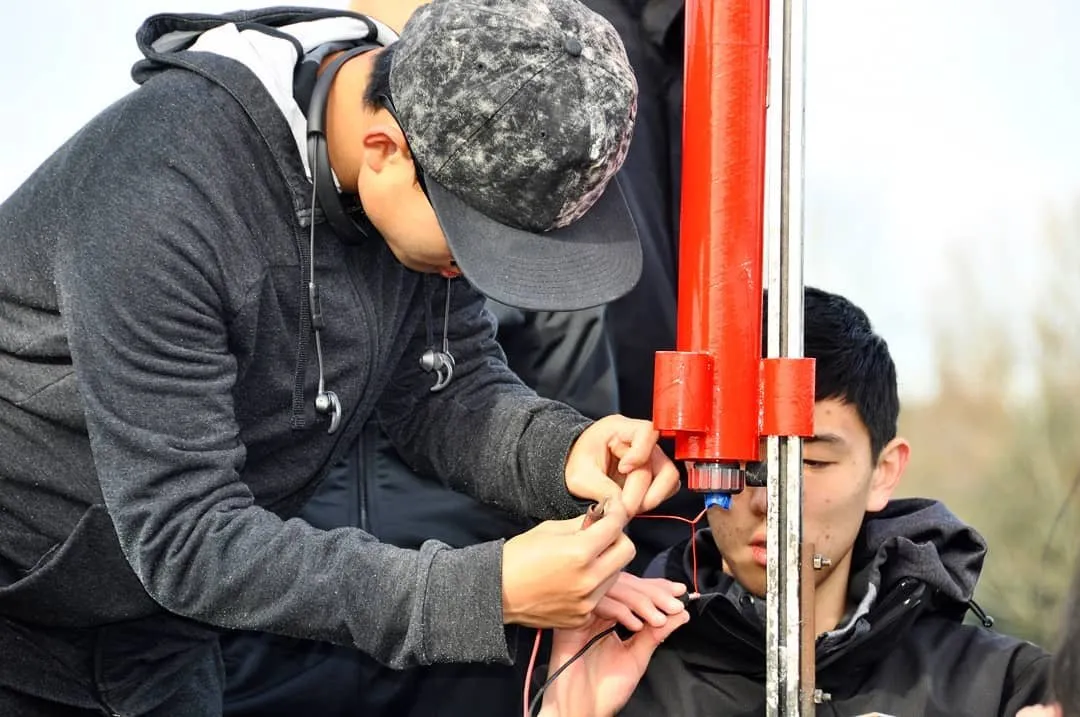
- The engine. It’s single-use and solid-fuel, and we only fly certified, store-bought ones. Never homemade.
- Motor codeF39-6
- The letter tells you how powerful it is, and each letter is up to twice the one before. The 39 is the average thrust in newtons, and the 6 is how many seconds it waits before popping the parachute.
- Apogee
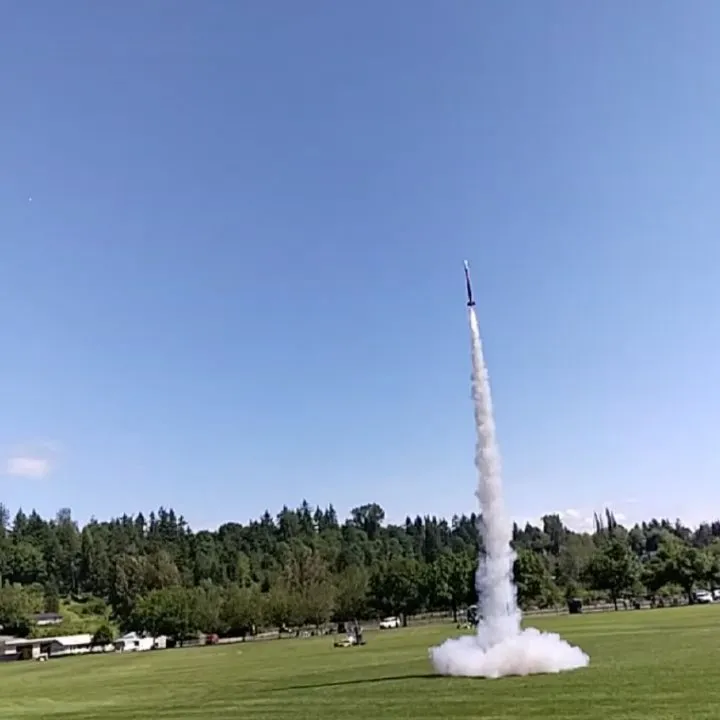
- The highest point of the flight, right before the rocket tips over and starts coming down.
- Ejection charge
- A little charge at the top of the motor. It goes off after the delay and pushes the parachute out.
- StabilityCG · CP
- For a rocket to fly straight, its center of gravity (CG) has to be in front of its center of pressure (CP). Rule of thumb: keep them at least one body width apart. People call that one caliber.
- Launch rail
- The metal guide the rocket rides up at launch. It keeps the rocket pointed straight until it’s going fast enough to fly on its own.
- Altimeter
- A tiny computer inside the rocket that figures out how high it went from the air pressure. ARC scores your flight off its reading.
- Simulation
- Test-flying your rocket on a computer before you build it. OpenRocket tells you roughly how high and how long it’ll fly with a given motor and weather.
- NAR observer
- An adult from the National Association of Rocketry who has to watch your qualification flights and sign off on them.